
Your 1-Year-Old
1-Year-Old Activities: How Toddlers Learn and Grow
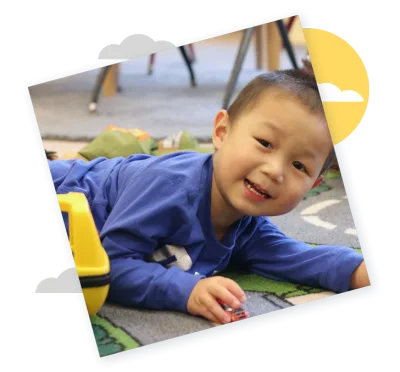
One day your child is taking a few cautious steps between pieces of furniture. The next, they're walking across the room carrying a book, a toy spoon and a very strong opinion about what should happen next.
The second year of life is full of change, and it's important to remember that a 12-month-old and a 23-month-old will look very different developmentally. Both are 1-year-olds, but they're often working on different skills, interests and challenges. Think of this page as a guide to the learning that happens throughout the second year, not a checklist of what every child should be doing at a certain age.
Below, you'll find eight areas of development and simple ways to support learning through everyday play, routines and exploration.
For a closer look at what your child may be doing month by month, visit our Developmental Milestones page.
Key Takeaways
One-year-olds build language, motor control and self-regulation through ordinary routines like meals, walks and cleanup.
Research links child-directed talk and responsive back-and-forth interaction with stronger vocabulary, processing and social development by age two.
Open-ended play—moving, banging, stacking, pouring, pointing and pretending—gives toddlers the repetition and room to gain new skills.
Learning and Play Through Creative Arts for One-Year-Olds
Your toddler wants to be part of the art they make. They hand you the crayon they want, clap after they finish a masterpiece and proudly carry their paper across the room to show you. Creative expression becomes much more intentional during the second year, even if the finished product still looks like joyful scribbles.
First Marks and Sensory Art
Many 1-year-olds begin making their first marks on paper using a whole-fist grip on chunky crayons. What starts as enthusiastic scribbling gradually becomes more intentional over the second year as toddlers gain greater control of their hands and fingers.
Finger painting, drawing and other sensory activities for 1-year-olds help strengthen the fine motor muscles and hand-eye coordination that will later support writing, self-feeding and other everyday skills.
Music, Movement and Dancing
Music and movement help toddlers recognize patterns, build coordination and practice listening skills. Research has also found links between rhythm and language development, which is one reason songs, rhymes and movement games are such valuable 1-year-old activities.
Expose your child to a variety of music throughout the day. Folk songs, jazz, classical music, children's songs and music from different cultures all give toddlers new sounds, rhythms and experiences to explore.
Signs of Learning at Childcare
Creative, child-centered programs make art and music part of everyday life. Look for classrooms where toddlers can access materials such as crayons, finger paint and play-dough on a regular basis.
You may also see simple instruments available for exploration, and caregivers who sing, move and dance alongside children. Artwork displayed around the room should reflect each child's unique ideas and experiences rather than rows of identical crafts.
Play Ideas: Creative Arts for 1-Year-Olds
Crayon Roll
Tape a large sheet of paper to the floor and place a handful of chunky crayons on top. Encourage your toddler to roll, push and move the crayons across the paper to experiment with mark-making from different angles.
Kitchen Band
Gather a wooden spoon, a pot lid and a plastic container. Play music and drum along together while exploring fast and slow rhythms, loud sounds and quiet sounds.
Frozen Paint Pops
Freeze colored water in an ice cube tray with craft sticks. Let your toddler paint with the melting cubes on thick paper while exploring color, temperature and movement.
Social-Emotional Development in One-Year-Olds
If you've ever watched your toddler proudly insist on doing something all by themselves, you've seen social-emotional development in action. The second year brings growing independence and big emotions, along with exciting new skills for managing them. Toddlers are beginning to name how they feel, find ways to soothe themselves and notice the feelings of the people around them.
Desire For Independence Clashes With Separation Anxiety
One of the biggest developmental tasks of the second year is learning how to be independent while staying connected. Your toddler may insist on feeding themselves, choosing their own book or walking instead of being carried. Five minutes later, they may want to be in your lap.
Separation anxiety often peaks between 10 and 18 months. While it can be challenging, it is generally a sign of healthy attachment, not a problem that needs to be fixed. Predictable routines, warm goodbyes and consistent returns help children learn that separations are temporary and that trusted adults come back.
Check out our blog on separation anxiety for more advice.
Tantrums, Big Feelings and Building Emotional Vocabulary
During the second year, emotions often arrive before the skills needed to manage them. A toddler may feel frustrated, disappointed, excited or overwhelmed long before they can explain those feelings with words. Tantrums are a normal part of development and not a sign that something has gone wrong.
When big feelings happen, your calm response matters. Naming emotions with simple language such as, "I can see you're frustrated," or, "You're sad because it's time to leave," helps build emotional vocabulary over time.
Signs of Learning at Childcare
A nurturing childcare environment helps toddlers feel safe enough to explore, express themselves and build relationships. Look for caregivers who respond quickly and consistently when children are upset, use each child's name warmly throughout the day and model emotional language by saying things like, "You look frustrated," or, "You're excited to play outside."
Childcare providers should also help children find solutions to their conflicts.
Play Ideas: Social-Emotional Activities for One-Year-Olds
Feeling Faces
Make exaggerated expressions together in front of a mirror and name each one: "Happy!" "Surprised!" "Sleepy!" "Frustrated!" This simple game helps build emotional vocabulary and encourages your toddler to recognize facial expressions.
Transition Song
Create a short song or familiar phrase for everyday transitions like bath time, getting in the car or leaving the park. Predictable routines help toddlers feel more secure when it's time to switch activities.
Share the (Pretend) Meal
Invite a stuffed animal or doll to join snack time. Encourage your toddler to offer pretend bites of food and talk about whether their guest is hungry, happy or full. Simple pretend play helps children begin thinking about how others might feel.
Looking for more ways to help your child build empathy? Check out our blog with activities for developing empathy.
Early Math: Learning and Activities
Math is part of your toddler's everyday world, even if it doesn't look like numbers on a page. Every time your child fills and empties a container, stacks blocks or asks for "more," they're building the number sense, spatial reasoning and problem-solving skills that will support math learning for years to come.
Sorting, Stacking and Understanding Quantity
Toddlers learn math best by moving, touching and experimenting. Shape sorters introduce geometry and spatial reasoning as children figure out which pieces fit where. Stacking blocks teaches sequencing, balance and cause and effect. Filling and dumping containers helps toddlers explore volume, size and quantity.
Some of the earliest math concepts show up during everyday routines. Words like "more" and "all gone" help children understand quantity long before they can count. You can reinforce these ideas naturally by counting socks while getting dressed, crackers at snack time or toys as you clean up together.
Patterns, Routine and Cause-and-Effect Reasoning
Toddlers are naturally drawn to patterns. A predictable daily routine of wake up, breakfast, playtime, nap and bedtime helps children recognize that events happen in a sequence.
Cause and effect is another early math skill. When your child presses a button and music plays or drops a ball down a ramp to watch it roll, they're testing an idea and learning from the result.
Signs of Learning at Childcare
A strong childcare program weaves early math into everyday play and routines. Look for classrooms with shape sorters, stacking toys and containers for filling and dumping. Caregivers should naturally use words like "more," "all gone," "big" and "small" throughout the day while counting during transitions, snack time and play.
Play Ideas: Math Activities for One-Year-Olds
Fill and Dump Station
Fill a basket with safe household objects and offer a few containers of different sizes. Watch as your toddler fills, empties and compares them. Talk about what they're discovering along the way.
One More, All Gone
Count snack items together before your child begins eating. When the last bite is gone, say, "All gone!" This simple routine builds early number sense and quantity awareness.
Stack It Up
Build towers with soft blocks, then celebrate when they tumble down. Count each block as you stack and start again. Building a tower helps children recognize “bigger and smaller” and “more and less” which are great math skills.
Science for One-Year-Olds
Your one-year-old approaches the world like a scientist. They drop the same toy again and again, splash every puddle they can find and stop to investigate anything that looks, feels or sounds different. Every experiment helps them answer a simple question: "What happens if I try this?"
Cause and Effect — The High Chair Experiment
If your toddler drops a spoon from the high chair, watches where it lands and immediately does it again, they're conducting an experiment. They're asking a question, observing the result and testing whether it happens the same way every time.
The same kind of learning happens when toddlers smear ketchup across a tray, pour water into containers of different sizes or roll a ball across the kitchen floor and then across the grass outside. Every experiment teaches them something about how the world works.
Outdoor Science — The Original Hands-On Lab
The outdoors is one of the best science classrooms for a 1-year-old. Every walk offers something new to notice, whether it's a line of ants crossing the sidewalk, a rough tree trunk or a leaf blowing across the grass.
Even reactions that don't seem enjoyable are part of learning. Wet grass between bare toes, cool mud on little fingers or a windy afternoon all provide new information about the world
Signs of Learning at Childcare
Strong childcare programs encourage toddlers to investigate the world around them every day. Look for water tables, sensory bins and a variety of materials with different textures, weights and sizes to compare.
Look for childcare providers who are helping children explore these materials in a safe way.
Play Ideas: Science Activities for 1-Year-Olds
Puddle Science
After a rain, pull on boots and explore puddles together. Notice which puddles are deep or shallow and talk about the different splashes they make.
Texture Tour
Gather a few safe objects with very different textures, like a smooth stone, a soft piece of fabric and rough tree bark. Let your toddler touch each one and describe what they feel.
Container Water Play
During bath time or outdoor play, offer containers of different shapes and sizes for filling, pouring and comparing. Toddlers will naturally begin exploring volume, movement and cause and effect.
Want more ways to encourage curious little scientists? Explore our Science Hub for more hands-on activities and ideas.
Social Studies: Family, Routine, and Belonging
Your toddler is becoming an active participant in family life. They want to carry the grocery bag, wave to the mail carrier and help stir the pancake batter, even if it takes twice as long. During the second year, children begin discovering that they belong not only to a family, but to a neighborhood and a community, too.
Family and Identity
One-year-olds love doing what the people around them are doing. They reach for the broom when you're sweeping, try to answer your phone and proudly carry a washcloth to the bathroom. These everyday moments help toddlers understand that families work together and that everyone has a role to play.
Community and the World Beyond Home
For a 1-year-old, every errand is an adventure. The grocery store becomes a place to point out apples and bananas. The library is where books live. A walk around the neighborhood introduces dogs, construction trucks, flowers and friendly neighbors.
Look for opportunities to include your toddler in your community. Attend a library story time or explore a local park. These outings help children become comfortable in new places while learning that communities are made up of many different people, jobs and traditions.
Check out our blog on the importance of story time for kids.
Signs of Learning at Childcare
Strong childcare programs help toddlers feel connected to both home and the wider world. Look for classrooms that celebrate the cultures and traditions of the families they serve and include books that reflect many kinds of families and communities.
Play Ideas: Social Studies Activities for 1-Year-Olds
Family Job Basket
Choose one simple household job your toddler can help with each day, like carrying napkins to the table, putting clean socks in a basket or watering a houseplant. Helping builds confidence and a sense of belonging.
Neighborhood Walk Bingo
Pick three or four things to look for during a walk, like a stop sign, a dog, a school bus or a flower. Celebrate each discovery together as your toddler begins noticing the world around them.
Library Explorer
Visit your local library and let your toddler choose a book to borrow. While you're there, point out the children's area, greet the librarian and talk about how everyone shares the books.
Physical Movement and Development for One-Year-Olds
Keeping up with a 1-year-old can feel like a full-time job. One day they're taking a few wobbly steps. Before long, they're walking with purpose, climbing onto the couch and hurrying toward whatever catches their eye. Every new movement builds strength, coordination, confidence and a better understanding of how their body works.
Gross Motor Development — Walking, Climbing, Running
The second year is full of exciting movement milestones. As a toddler’s balance improves, they also learn to squat down, pick up a favorite toy and stand back up without falling over. That simple movement is a surprisingly sophisticated skill that combines strength, balance and coordination.
Balls and push and pull toys encourage toddlers to move in new ways while building confidence. Even after walking becomes easier, floor play continues to be important. Crawling through a cardboard box tunnel or climbing over couch cushions can help children develop coordination and body awareness.
Fine Motor Skills and Growing Self-Care
Many everyday routines become opportunities to practice fine motor skills. Let your toddler hold the spoon, pull off their socks, zip a backpack with your help or push an arm through a jacket sleeve. These small acts of independence strengthen hand muscles while building confidence, persistence and problem-solving skills.
Signs of Learning at Childcare
A high-quality childcare program gives toddlers plenty of room to move. Look for open spaces for walking and climbing, low climbing structures, push and pull toys and outdoor play areas designed for young children.
Inside the classroom, you should also see materials that strengthen fine motor skills, such as peg puzzles, stacking toys and simple bead mazes. Caregivers should patiently encourage children to participate in everyday routines like washing hands, cleaning up toys and feeding themselves, even when those tasks take a little longer.
Play Ideas: Physical Activity Ideas for 1-Year-Olds
Adventure Path
Create a simple obstacle course with couch cushions, blankets and sturdy boxes. Encourage your toddler to move across different obstacles while you cheer them on.
Barefoot Nature Walk
On a warm day, let your toddler safely explore grass, sand or shallow water with bare feet. These sensory activities for 1-year-olds help build balance, body awareness and confidence while introducing new textures.
Toddler Snack Helper
Offer bite-sized pieces of soft fruits or vegetables and give your toddler opportunities to feed themselves. This can also be a low-pressure way to introduce new foods, giving them time to explore unfamiliar tastes and textures at their own pace. When the meal is over, invite them to carry their plate to the table or throw away a napkin.
Language and Early Literacy in One-Year-Olds
The second year is one of the fastest periods of language growth, and it's often when parents realize their child has understood far more than they were ever able to say.
The Word Explosion and How to Support It
Most toddlers begin the second year with just a handful of words. Over the months that follow, many experience a dramatic increase in vocabulary and begin combining two words into simple phrases like "more milk," "Daddy go" or "no nap."
One of the best ways to support this growth is by talking with your child throughout the day. Narrate what you're doing as you make lunch, fold laundry or walk through the grocery store. When your toddler babbles or says a word, pause and respond as if you're having a real conversation. Ask simple questions, then give them time to answer with a word, gesture or expression.
Books, Songs and Early Literacy
Reading together is one of the most valuable 1-year-old activities you can share. Your toddler may point to familiar pictures, ask "What's that?", turn pages out of order or insist on reading the same favorite book every night. While it might not feel like traditional reading, all of these experiences help build vocabulary, comprehension and an understanding that stories have meaning.
After storytime, your toddler may enjoy scribbling or painting, early signs of developing writing skills.
Through Dolly Parton’s Imagination Library, children under the age of five can get one free book sent to their home every month.
Signs of Learning at Childcare
Language-rich childcare classrooms are filled with conversation throughout the day, not just during story time. Look for books displayed where toddlers can reach them independently and teachers who happily reread favorite stories whenever children ask.
Also look for writing throughout the classroom in the form of labeled shelves, supplies, and cubbies. Labels with pictures or in multiple languages are great as well.
Play Ideas: Language Activities for 1-Year-Olds
Name That Thing
As you move through your day, point to familiar objects and say their names. When your toddler points at something, give them the word right away. This simple habit is one of the easiest activities for 1 year olds to build vocabulary.
Personalized Sing-Along
Add your child's name to favorite songs or make up simple tunes about what you're doing together. Hearing familiar words in music helps strengthen both language and identity.
Read It Again
If your toddler brings you the same book for the fifth time today, read it with enthusiasm. Repetition helps children recognize words, anticipate what comes next and build confidence as early readers.
Play and Exploration for 1-Year-Olds
Everything changes once your toddler is on the move. Walking opens up a much bigger world, and suddenly every room, sidewalk and playground becomes something to investigate. The best activities for 1 year olds give toddlers room to explore, make choices and discover what they can do with their growing bodies and imaginations.
On the Move and Into Everything
At this age, movement and learning go hand in hand. Your toddler isn't just pushing a laundry basket across the room or carrying a bag from one place to another. They're figuring out how objects move, how much force they need and what their own body is capable of doing.
Simple toys often become the most engaging. Push toys, pull toys, stacking cups and containers to fill and empty encourage toddlers to experiment while strengthening balance, coordination and problem-solving skills. A pile of couch cushions can become a climbing challenge, and an empty box can inspire twenty different games.
First Steps Into Pretend Play
During the second year, imagination begins to appear in new ways. A block might become a phone, a spoon becomes an airplane or a bowl turns into a funny hat. These early moments of pretend play show that your toddler is beginning to understand that one object can represent something else, an important step in cognitive development.
Signs of Learning at Childcare
Quality childcare programs give toddlers plenty of room to move, explore and make choices throughout the day. Look for classrooms with open floor space, simple toys like blocks, containers and dolls and opportunities to practice walking, climbing and carrying safely.
Play Ideas for 1-Year-Olds
Dance and Freeze
Put on a favorite song and dance together, then pause the music and freeze. Your toddler may not stop on cue every time, but following the rhythm, watching you and anticipating what comes next makes the game fun while building listening and coordination.
Mirror Games
Sit together in front of a mirror and take turns making silly faces, waving or clapping. Copying each other's expressions builds self-recognition, imitation and connection.
Sticker Play
Place a few large, toddler-safe stickers on a sheet of paper and let your child peel, press and reposition them with help as needed. This simple activity encourages fine motor control and creative exploration.
Visit our Play and Exploration Hub for activities that grow alongside your toddler's curiosity and independence.
Conclusion
Tracking Your 1-Year-Old's Milestones
The second year is full of remarkable changes, and no two toddlers experience them in exactly the same way. Use the 1-year-old activities on this page as ideas to support your child's learning, not as a checklist of what they "should" be doing.
For a closer look at month-by-month milestones and information about developmental screenings, visit our Developmental Milestones page or check out the CDC’s Developmental Milestones page.
Just arriving from the baby stage? Explore our Baby Hub for development and play ideas from birth to 12 months
As your child gets closer to their second birthday, discover what's next in our 2-Year-Old Hub.
Your 2-Year-Old